Mastering the Art of Magic - Eugene Burger
Eugene Burger · 2000
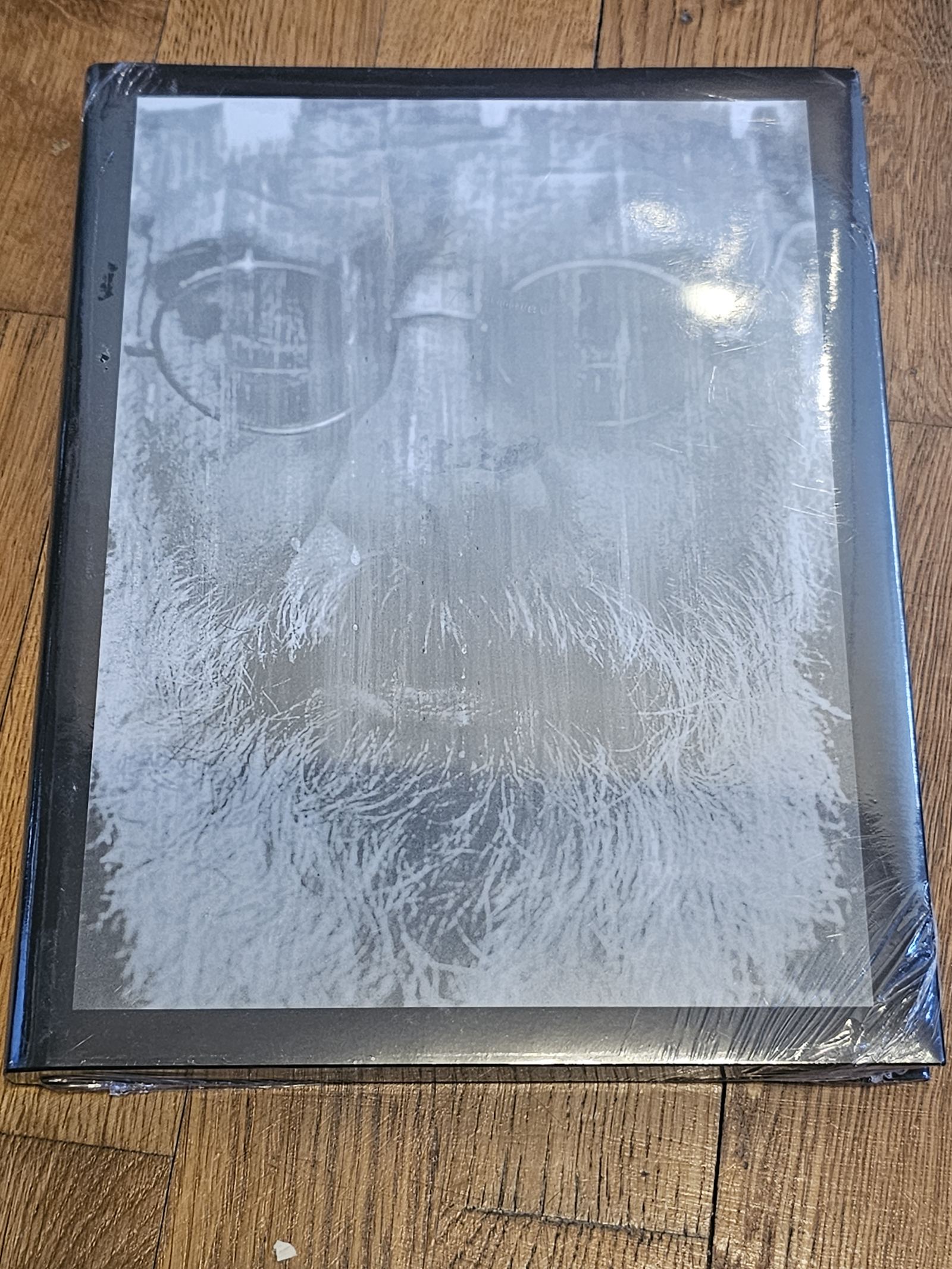
Mastering the Art of Magic is not an ordinary magic book. If you are simply looking for as many new tricks and methods as possible, there are probably more suitable books. But if you want to understand why some magicians can captivate an audience with relatively simple effects while others struggle to create emotion with technically difficult material, this book has a great deal to offer.
Published in 2000 by Kaufman and Company, the book brings together several of Eugene Burger’s earlier writings from the 1980s in one substantial hardcover volume. The original material was redesigned and complemented by almost 200 illustrations by Earle Oakes.
One of the most interesting aspects is Burger’s later commentary. Looking back at his own routines and ideas years later, he explains what he changed, what continued to work and why certain effects eventually disappeared from his repertoire.
What Is the Book About?
The book constantly moves between practical magic and performance theory.
Burger explores questions such as:
- How do you build a genuine connection with an audience?
- How important are silence, timing and eye contact?
- Why should a magician develop a script rather than simply use “patter”?
- How can spectators become active participants in an effect?
- How does close-up magic change in restaurants and professional performing situations?
- How do you turn a trick into a real performance?
That final question runs throughout the book. Burger is often less interested in how clever a method is than in what the audience actually experiences.
What Tricks Are Included?
Despite its strong emphasis on theory, Mastering the Art of Magic is certainly not just a collection of essays. It contains a substantial amount of practical material drawn from Burger’s repertoire.
Among the routines and ideas discussed are material involving:
- The Mullica Wallet
- Brainwave Deck
- Ashes on the Hand / A Voodoo Ritual
- Slow Motion Bill Transposition
- Torn and Restored Thread
- Production of a filled shot glass
- Card productions and revelations
- Flash paper
- Glorpy / Ghost Handkerchief
- Money and transposition effects
Some of these ideas later developed into well-known Burger routines and products.
However, the real value often lies less in the trick itself and more in seeing how Burger takes a relatively simple method and turns it into a complete performance.
What Is Particularly Good?
The greatest strength of the book is that Burger does not separate theory from practice.
He does not simply tell you that audience participation is important. His routines demonstrate how he actually incorporates that belief into his performances.
A large part of his repertoire directly involves the spectators. As a result, the magic does not simply happen in front of the audience - it frequently happens with them.
Burger’s later comments on his own earlier writings are also particularly valuable.
He does not treat his previous ideas as unquestionable truths. Instead, he explains what worked, what he later changed and, in some cases, why he eventually stopped performing particular effects.
This gives parts of the book the feeling of a conversation with an experienced professional discussing the evolution of his own repertoire.
What Could Be Better?
Anyone familiar with Eugene Burger knows that his magic had a very distinctive personal style.
Ghosts, rituals, candles, ashes, flash paper and mysterious stories suited his personality extremely well - but they will not automatically suit every other magician.
Some of the methods and props can also feel somewhat old-school from a modern perspective.
At the same time, that is one of the lessons of the book: a method does not have to be new or technically complicated to create a powerful experience for an audience.
Another possible criticism is that you may finish the book without immediately wanting to add a large number of its tricks to your own show.
Many of the routines are closely connected to Eugene Burger’s personality. Simply copying his presentations risks creating an imitation of Eugene Burger rather than applying his principles to your own performing character.
Anyone buying the book primarily in search of a collection of new killer tricks for their next set may therefore be disappointed.
Who Is This Book For?
For complete beginners who first need to learn card sleights, coin techniques and basic magic methods, Mastering the Art of Magic would probably not be the first book to choose.
It becomes much more interesting for magicians who already know how to perform tricks and eventually begin asking a different question:
How do I move from being someone who shows tricks to someone who creates a genuine magical performance?
This is where Eugene Burger’s thinking becomes particularly valuable.
The book is about presentation, personality, audience management, scripting, atmosphere and consciously considering why you perform a particular effect in the first place.
Conclusion
Mastering the Art of Magic is more a book about being a magician than a book about magic tricks.
Yes, there is plenty of material to perform. Some routines are excellent, while others may feel somewhat dated today or are so closely connected to Eugene Burger’s personality that you may not want to perform them yourself.
But that is not the main reason to read this book.
Its greatest strength lies in Burger’s thoughts on presentation, audience participation, scripting, professionalism, atmosphere and the deliberate construction of a repertoire.
If you are mainly looking for new methods, you may be disappointed.
If you already know how to perform magic and want to improve the way you present it, however, this is the kind of book that can remain useful for years. It is worth returning to later in your career, when you may discover completely different lessons in it than you did the first time.