Practical Mental Effects
Theodore Annemann · 1944
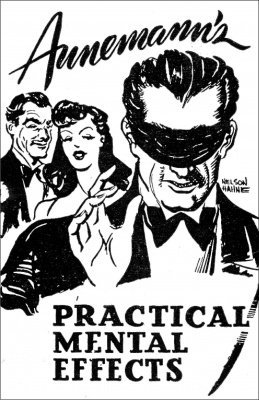
A substantial collection of mental magic drawn largely from The Jinx, bringing together Annemann and many other creators.
Practical Mental Effects - Theodore Annemann
Practical Mental Effects by Theodore Annemann is one of the major classic collections of mentalism. The book brings together a large selection of routines, techniques and ideas associated with Annemann and the creative circle surrounding his legendary publication The Jinx.
Published in 1944 shortly after Annemann’s death, the collection was compiled and edited by John J. Crimmins Jr. In addition to Annemann’s own material, it contains contributions and ideas from numerous other mentalists and magicians of the period.
Its wide range of methods and presentations provides a fascinating view of the development of mentalism during the first half of the twentieth century.
A Comprehensive Reference Work of Classical Mentalism
Practical Mental Effects is not devoted to one particular method or style.
Instead, it presents a substantial collection of approaches covering many of the traditional areas of mentalism.
Subjects include:
- predictions
- book tests
- sealed and secret messages
- card mentalism
- mind reading
- question-and-answer routines
- two-person mentalism
- writing, paper and envelope techniques
- various forms of predictions and revelations
This variety makes it the kind of book in which new ideas can continue to be discovered over many readings.
Theodore Annemann and The Jinx
Theodore Annemann is one of the most influential figures in the history of mentalism.
From 1934 to 1941 he published The Jinx, a periodical that became an important platform for new ideas in mentalism and magic.
Many principles now associated with classical mentalism were published, discussed or developed in its pages.
Practical Mental Effects draws heavily on this creative environment and preserves much of that thinking in book form.
Methods and Presentation
Many of the effects were created at a time when mentalism was presented differently from the way it is today.
The underlying methods and principles can still be extremely effective, but language, pacing and presentation often benefit from adaptation for modern audiences.
Some routines are remarkably direct and elegant, while others contain procedures that may feel elaborate by contemporary standards.
Selective study is therefore important.
The book does not provide a ready-made modern mentalism act. Instead, it offers a large reservoir of material from which performers can select, adapt and develop their own presentations.
Who Is the Book For?
Practical Mental Effects is particularly suited to mentalists and magicians who want to study the foundations and history of their art in greater depth.
Beginners can discover a broad range of classical principles.
Experienced mentalists can rediscover older methods, simplify them and combine them with contemporary presentation.
The book is especially valuable for performers interested in understanding the origins of many principles still used in mentalism today.
Historical Importance
The book documents an exceptionally creative period in the development of mentalism.
Many of its principles were subsequently adopted, modified and expanded by later performers and can still be found in different forms in professional mentalism today.
Practical Mental Effects is therefore both a practical instructional work and an important historical document.
Anyone seriously studying Annemann, The Jinx or the development of modern mentalism is likely to encounter this book.
Bibliographic Information
Principal author: Theodore Annemann
Editor: John J. Crimmins Jr.
Illustrations: Nelson Hahne
Title: Practical Mental Effects
Original language: English
First edition: 1944
Original publisher: Holden's Magic Shop
First-edition length: 310 pages
Subject: Mentalism / Mind Reading / Predictions / Book Tests / Card Mentalism / Two-Person Mentalism
Later editions, reprints and translations may differ in page count, layout and physical format.
Practical Mental Effects and Practical Mental Magic
When purchasing a copy, it is worth checking the exact title and edition being offered.
Practical Mental Effects was originally published in 1944. Later publications and related collections of Annemann material may appear under different titles or in revised forms.
Practical Mental Magic in particular is frequently encountered in connection with Annemann’s material.
Buyers should therefore check the publisher, publication date, pagination and contents of the specific copy.
Published Opinions
Paul Fleming, in a review later reproduced by Lybrary, praised the extraordinary quantity of material contained in the book.
At the same time, he questioned some of the more elaborate procedures.
This highlights an important aspect of Practical Mental Effects: the reader receives an enormous reservoir of ideas but must decide which material best suits a personal style and contemporary performance.
These are published opinions about the book and are not reviews by Re-Appear or individual sellers.
Collector’s Notes
Because Practical Mental Effects has appeared in different editions over many decades, copies can vary considerably.
When purchasing, it is useful to check:
- publisher
- publication year
- language
- hardcover or paperback
- completeness
- condition of the binding
- presence and condition of any dust jacket
- annotations or signatures
- exact edition and page count
Early editions may be significantly more desirable to collectors than later reprints.
Practical Value
Practical Mental Effects rewards repeated study.
Trying to perform every routine in sequence is unlikely to be the best way to use the book. Its greater value lies in selecting particular subjects, comparing different approaches and developing material that suits the performer’s own style.
Some ideas may initially appear historical, yet with contemporary presentation they can feel remarkably modern.
The book is therefore less a complete show and more an extensive toolbox for the mentalist.