It Must Be Mind Reading
George B. Anderson · 1949
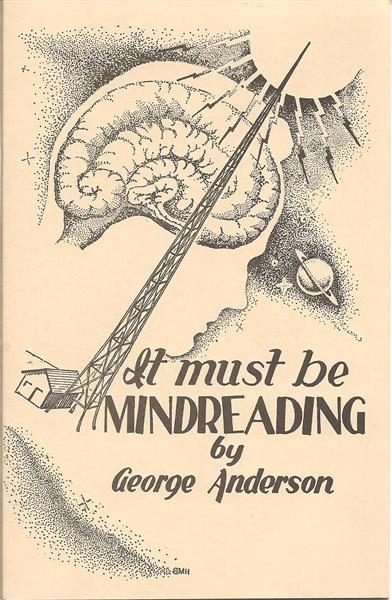
George B. Anderson’s 1949 classic joins practical Q&A mentalism, billets, impression devices, book tests and professional staging advice for the solo performer.
A practical approach to question-and-answer mentalism
George B. Anderson's It Must Be Mindreading was first published by Ireland Magic Company in Chicago in 1949. The original booklet is generally described as a 62-page, saddle-stitched softcover. Later printings appeared in 1954, 1963, 1974 and 1977, with Magic, Inc. handling later editions. The book concentrates on the question-and-answer act, in which a performer apparently responds to private concerns that spectators have merely thought of or written down.
Anderson writes from the viewpoint of a working solo entertainer. His stated preference is for simple methods, little equipment, no confederates, no heavy apparatus and material that has been tested before an audience. That practical standard gives the book its identity: the method matters, but the real subject is how information is acquired, organised and presented so that an audience experiences apparent thought reading.
What the book contains
The opening discussion, The First Prediction, examines the structure of a Q&A act. No Questions Written explores how to create the conviction that nothing has been recorded. Other chapters present an inexpensive impression device made from a matchbook, a playing-card approach to narrowing a spectator's question, a centre tear, a palmistry presentation, a billet switch using a cigarette packet, envelope work and clipboard reading.
Anderson also addresses the parts that turn a method into an act. Alibi Answers considers responses to awkward or trick questions. The Vital Spot in the Question Act explains how a strong ending can give shape to the whole sequence. The book then broadens into a comedy prediction, a staged murder mystery, drawing duplication, two book tests, an envelope identification effect, card mentalism, muscle reading and a multiple prediction using a swami-style principle. A business chapter discusses building professional work, followed by bibliographical guidance.
Why the material still matters
The book is valuable less as a catalogue of secrets than as a lesson in economy. Anderson repeatedly looks for a direct route between effect and audience. Readers can compare several ways of obtaining written information and see how the chosen method affects pacing, fairness and staging. His attention to endings, outs and audience objections is particularly useful because those issues remain relevant even when the props change.
Some details belong unmistakably to 1949. Cigarette packets, razor blades, older envelope designs and gendered social assumptions require replacement or rewriting. Modern performers should also distinguish theatrical mentalism from genuine counselling or claims of supernatural authority. Private questions may concern health, money or relationships; responsible performance needs clear boundaries and respect for participants.
Editions and collector guidance
Known Ireland Magic Company printings include the 1949 first edition and later printings from 1954 and 1963. Magic, Inc. issued subsequent printings, including editions dated 1974 and 1977. The work also appears in George B. Anderson's Collected Works, published around 1980, and in modern re-typeset digital editions with different pagination.
When buying an older copy, check the publisher, printing statement, page count, staples, wrappers, ownership marks and whether the index and bibliographies are complete. It Must Be Mindreading remains a useful historical and practical text because it connects techniques for gaining information with the harder task of constructing a convincing one-person performance.